Notice: One of our vendors was impacted by a security incident, which affected some of our patients’ or their primary insured’s protected health information. Learn more.
From devices to dashboards — Caregenix unifies data, predictive analytics, and provider workflows into one intelligent ecosystem.
Explore Our AI Platform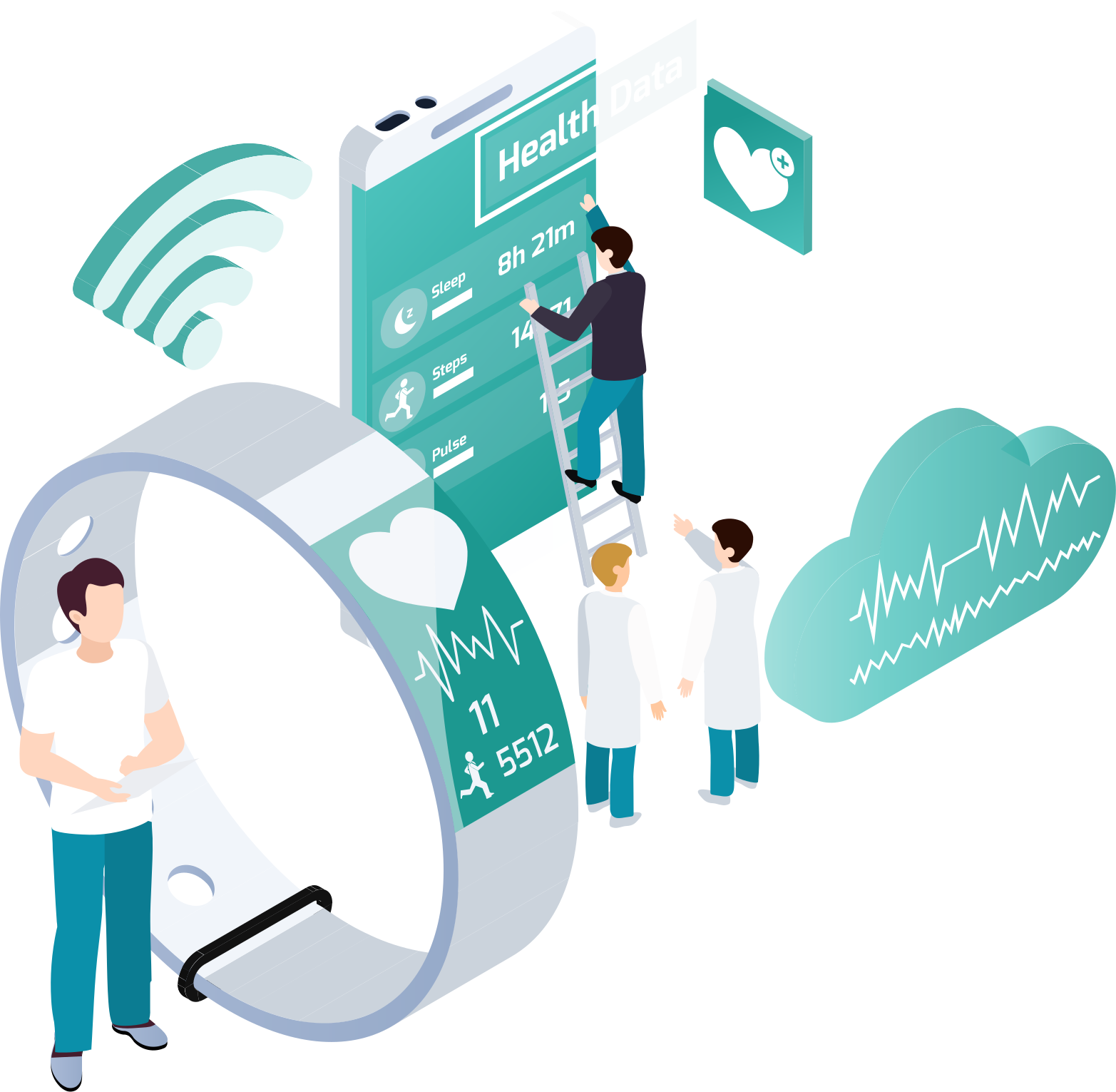



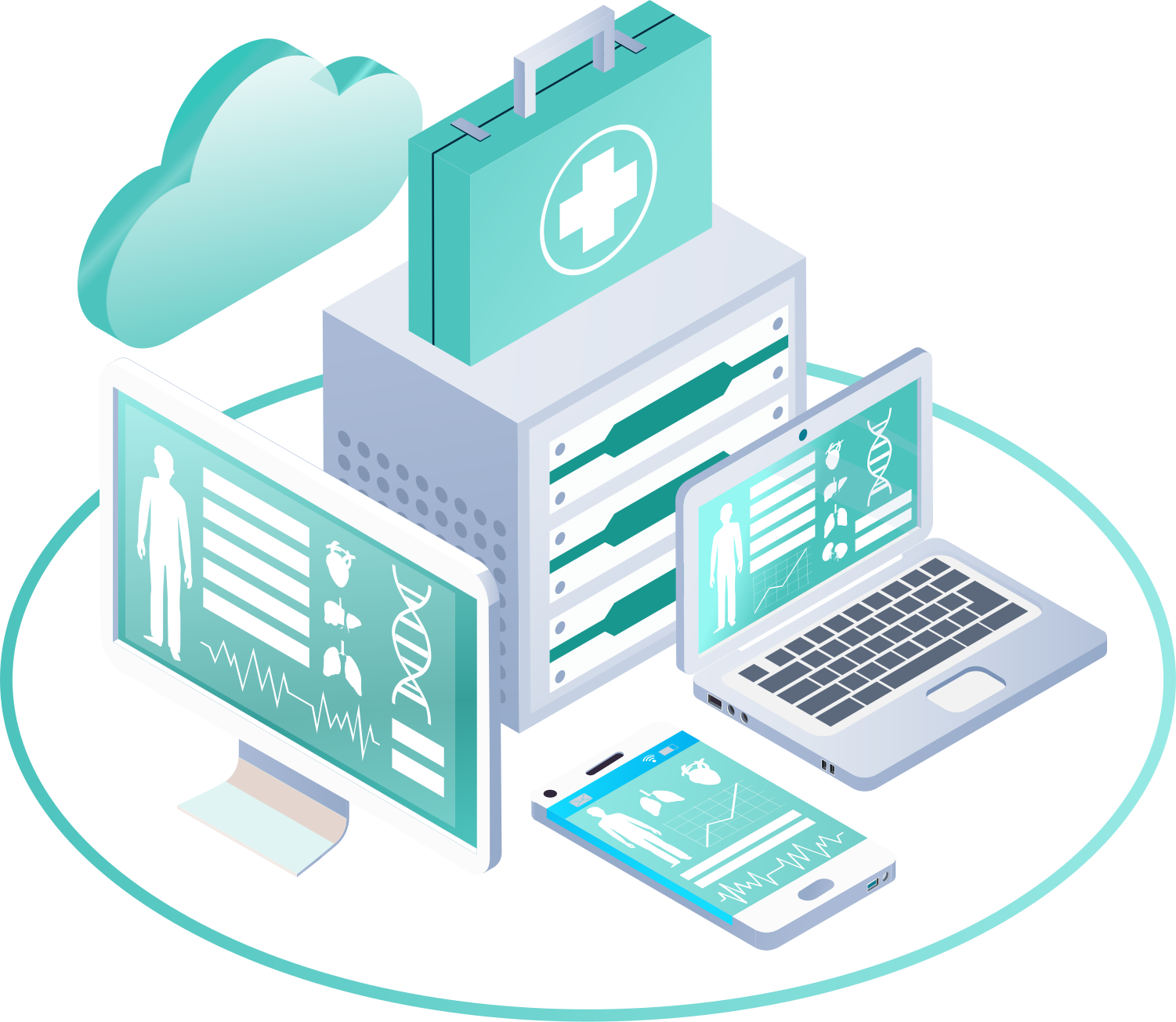

Where data is gathered from various sources such as patient vitals, EMR data, claims data, and wearable devices.

The front-end interfaces that users engage with — dashboards, alerts, portals, and clinical tools.

The cloud computing and storage environment that securely processes all data.

Connects the AI ecosystem to external systems like Epic, Cerner, or billing platforms.

The intelligence of the platform — predictive models, natural language processing (NLP), and algorithms that interpret and act on data.
 Smarter Remote Care
AI can automatically flag high-risk or non-compliant patients, enabling nurses and providers to intervene proactively.
 Predictive Population Health
By aggregating data across states and clinics, we can identify outcome trends — such as which patient cohorts respond best to RPM or which providers consistently outperform benchmarks.
 Automated Documentation & Billing
AI can assist in generating accurate time logs, compliance summaries, and CPT codes (e.g., 99457, 99490), reducing manual work and billing errors.
 Personalized Patient Engagement
AI can tailor communication — texts, calls, reminders — based on each patient’s engagement and health patterns, driving better adherence and satisfaction.
 Strategic Advantage
Positioning Caregenix as a Full-Stack AI Remote Care Platform differentiates us from competitors who only handle fragments of the care continuum (such as device logistics or data dashboards without intelligence).

At CareGenix, our mission is to remove barriers and deliver the best care possible. We believe personalized solutions lead to success in every case. Contact us today for a complimentary consultation and discover how we can help you achieve better outcomes.